%20(1).png)
5 Little-Known Advanced Snooker Cueing Techniques Top Pros Use (And You Can Too)
Updated: Nov 9, 2025
Snooker may look elegant and effortless when the pros play — a gentle nudge, a smooth stroke, and the ball glides perfectly into the pocket. But behind that grace lies deep technical mastery, built on years of refining one crucial skill: cueing technique.
While every player learns the basics — grip, stance, and alignment — only the best of the best go beyond that to develop advanced snooker cueing techniques that give them consistent precision under pressure. These are the subtle skills that separate a good club player from a genuine master of the cue ball.
In this post, we’ll uncover five little-known advanced cueing techniques used by top professionals and greatest snooker players — the ones that rarely get talked about in coaching books but make all the difference in performance. The best part? With awareness, practice, and patience, you can learn them too.
What are Advanced Snooker Cueing Techniques?

Advanced cueing isn’t about fancy shots or trick plays — it’s about cue ball control, precision, and adaptability.
Top pros master the micro-movements of the cue and body that allow them to reproduce the same smooth, straight stroke hundreds of times under match pressure.
Advanced cueing techniques usually involve:
Micro-adjustments in cue delivery to control spin, pace, and cue ball reaction.
Tactile feedback awareness — understanding how each stroke “feels” in the hand.
Cue-ball striking consistency, even under mental fatigue.
Dynamic body balance, ensuring zero unwanted movement during impact.
Let’s dive into the five techniques that embody these traits.
1. The “Feathering Awareness” Technique – Controlled Rhythm Cueing

Feathering — the small back-and-forth motions of the cue before the final delivery — is often overlooked. Many amateurs use it mechanically, without realizing it’s one of the most powerful tools for developing shot rhythm and cue-ball accuracy.
What Pros Do Differently
Pros like Ronnie O’Sullivan and Neil Robertson use feathering not just as a pre-shot ritual but as a feedback mechanism.
Each feathering motion helps them sense:
The line of aim (visual alignment).
The cue’s balance and smoothness in hand.
The timing and rhythm of the stroke.
By the last feather, they’re not thinking anymore — they’re feeling the shot.
How to Practice This Technique
Vary your feathers consciously: Start with 3 feathers, then 5, then 7. Notice how your rhythm changes.
Add purpose to each feather: The first feather checks aim, the next adjusts your pace, and the last focuses your mind on cue-ball contact.
Finish on a pause: Before delivery, pause slightly on the final backstroke. That microsecond stillness allows your brain to lock in the perfect cue action.
Pro Tip: Try feathering slower than usual for long pots. It calms the nerves and improves follow-through timing.
Why It’s Advanced
Because feathering isn’t mechanical — it’s rhythmic intelligence. Professionals use feathering to mentally and physically sync with the shot. That’s what turns consistent cueing into effortless mastery.
2. The “Invisible Pause” Technique – Timing the Strike Perfectly

Every pro has that silky-smooth stroke that looks like the cue just flows through the ball. The secret? A tiny, almost imperceptible pause at the end of the backswing.
This is known as the Invisible Pause — one of the most important advanced cueing techniques ever developed.
How It Works
Most amateurs rush their stroke. They pull back and immediately drive forward, creating tension and jerky contact. Professionals, on the other hand, allow the cue to stop momentarily at the end of the backswing.
This pause:
Prevents unwanted muscle tension.
Ensures perfect cue-ball timing.
Helps the player “see” the shot before delivery.
It’s similar to a golfer’s swing or a tennis serve — the best players pause just long enough for their body to synchronize with their mind.
How to Practice the Invisible Pause
Take a slow backswing.
When you reach the end, pause for half a second.
During this pause, visualize the cue-ball impact point.
Deliver the cue smoothly, not forcefully.
Drill Example:Place the white on the baulk line and aim for a slow straight pot into the middle pocket. Add a slight pause every time. You’ll notice how much more controlled and straight your cueing feels.
Why It’s Advanced
The Invisible Pause requires high awareness and body control. It can’t be faked — it comes from deep understanding of timing and rhythm. Once mastered, it will make your cue action feel smoother, lighter, and more accurate than ever before.
3. The “Cue Grip Pressure Modulation” Technique – Dynamic Touch Control
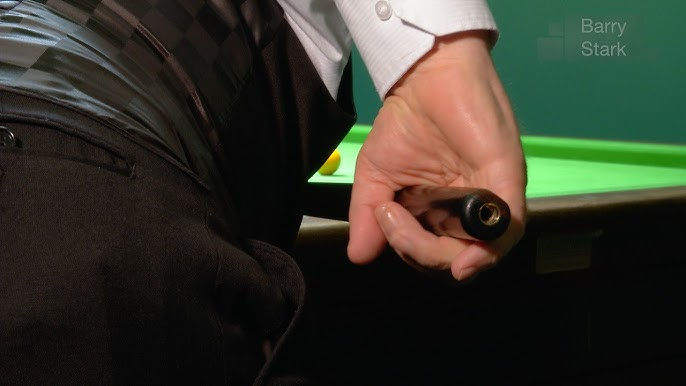
Image credits: Barry stark
One of the biggest myths in snooker coaching is that you should always hold the cue lightly. While that’s mostly true, top pros subtly change their grip pressure depending on the shot type.
This is called Cue Grip Pressure Modulation, and it’s a game-changer for cue-ball control.
How Pros Use Grip Pressure
Soft grip for stun and delicate shots: allows a more natural, flowing delivery.
Slightly firmer grip for deep screw or power shots: gives more stability through the cue ball.
Neutral grip for standard pots: maintains consistent cue balance.
What’s key is that the grip never tightens during delivery. The pressure adjustment happens before the shot begins, and the cue is allowed to flow freely.
How to Practice Grip Pressure Control
Use a grip scale: Imagine your grip pressure on a scale of 1–10.
Soft touch = 3
Neutral = 5
Firm = 7
Practice playing the same shot at each grip level and observe how it affects the cue-ball reaction.
Focus on keeping your wrist, hand, and forearm relaxed — no tension during impact.
Why It’s Advanced
Grip pressure modulation is a tactile art — it’s about feeling the cue, not just holding it. Most amateurs grip too hard without realizing it. Pros treat the cue like a violin bow — fluid, responsive, and sensitive to every movement.
4. The “Cue Tip Path Control” Technique – Micro-Correction Cueing

Ever notice how top players seem to hit the cue ball exactly where they want, every single time? That’s not just alignment — it’s Cue Tip Path Control.
This technique focuses on the microscopic movement of the cue through the ball, ensuring a perfectly straight delivery and the intended cue ball spin.
The Secret of the Straight Line Delivery
When pros deliver the cue, it doesn’t wobble side-to-side — the tip travels on a laser-straight path. But more importantly, they can slightly angle that path when needed to apply side spin without throwing off the shot.
They achieve this by controlling:
The elbow drop (some use it, some don’t — depending on shot type).
The cue shoulder line, ensuring it’s aligned to the intended spin axis.
The follow-through distance, keeping it consistent for each type of shot.
How to Practice Cue Tip Path Control
Use a line-up drill: Line up 10 reds across the table and pot them one by one into the same pocket. Focus purely on cue tip direction during delivery.
Film your stroke: Watch if your cue moves sideways on impact — even a millimeter matters.
Train for micro-corrections: Adjust your bridge position or elbow height until the cue naturally flows straight.
Why It’s Advanced
Cue Tip Path Control is the most physically technical skill in snooker. It takes years of fine-tuning. But mastering it transforms your accuracy — because a cue that moves perfectly straight delivers power, spin, and consistency all at once.
5. The “Feel-Based Feedback Loop” Technique – Internal Cueing Awareness
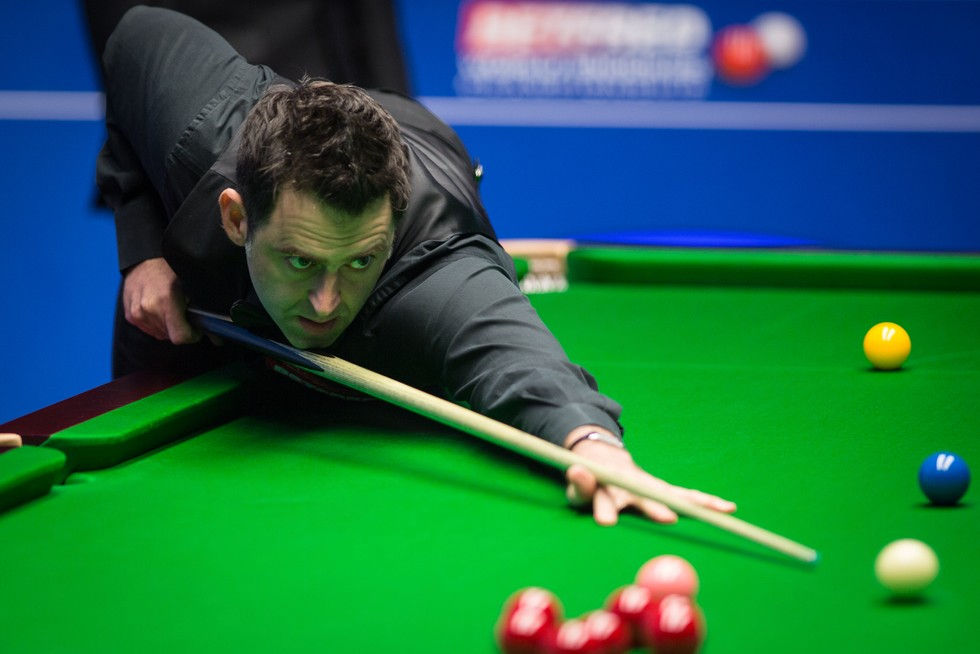
Here’s something that separates the truly elite from the rest: internal feedback.
Top pros don’t just see their shots — they feel them. Every stroke gives them data: how the cue slid, how the tip struck, how the cue ball reacted.
This is called the Feel-Based Feedback Loop — and it’s the ultimate advanced cueing technique.
How Pros Use Feel to Refine Cueing
During practice sessions, players like Mark Selby or Judd Trump often close their eyes after delivery and replay the feeling of the shot in their mind. They remember how the cue moved, the sound of the hit, and the tension in their hand.
That sensory feedback allows them to make tiny corrections for the next shot — often without even realizing it consciously.
How You Can Develop Feel-Based Cueing
Slow practice: Play shots at 30–40% speed, focusing purely on how each strike feels.
Record sensations: After each session, note what good shots felt like — hand relaxation, cue glide, sound of impact.
Replicate the feeling: Before each shot, recall that sensation and aim to recreate it.
Why It’s Advanced
Because it transforms cueing from mechanical repetition into intuitive mastery. The player stops “trying” to play perfect shots and starts feeling them. That’s the essence of true snooker artistry.
Bonus Tip: Combine Techniques for Real Power

Each of these techniques is powerful on its own, but the real magic happens when you combine them:
Use feathering awareness to set your rhythm.
Employ the invisible pause for perfect timing.
Adjust grip pressure for the shot’s demand.
Maintain tip path control for precision.
Finally, rely on feel-based awareness to make subconscious improvements.
That’s how pros maintain godlike consistency. Their technique isn’t five separate skills — it’s a unified flow.
Common Mistakes When Trying Advanced Cueing Techniques

Even advanced players fall into traps when refining cueing:
Overthinking the stroke: Advanced cueing should feel natural, not forced.
Practicing too fast: Slow repetition builds muscle memory; rushing ruins it.
Neglecting feedback: If you’re not analyzing your misses, you’re not learning.
Ignoring physical comfort: Every player’s anatomy is different — tweak your stance and bridge until the cueing motion feels effortless.
Remember, smoothness beats strength.
How Long Does It Take to Master Advanced Cueing?
There’s no shortcut — it’s a marathon of awareness and refinement. But with structured practice, most players notice results in 6–8 weeks of mindful training.
Dedicate 20–30 minutes per session to one technique at a time. Record yourself, analyze, and adjust. Consistency is the secret weapon.
Final Thoughts
Cueing is the heartbeat of snooker. Once you learn these five advanced cueing techniques — the Feathering Awareness, Invisible Pause, Grip Pressure Modulation, Tip Path Control, and Feel-Based Feedback Loop — you’ll start noticing an incredible transformation in your game.
Shots will feel easier. The cue ball will obey your intention. Your rhythm will settle into a natural flow that even pressure can’t shake.
Because at its core, advanced cueing isn’t about doing more — it’s about doing less, better.
FAQ – Advanced Cueing Techniques in Snooker
1. What’s the fastest way to improve cueing accuracy?
Start with slow, straight-line drills using a pause at the end of your backswing. Record your stroke and eliminate sideways movement before increasing shot difficulty.
2. Do I need a special cue for advanced cueing?
Not necessarily. A well-balanced cue that feels comfortable in your grip and delivers consistent feedback is enough. Focus on technique before upgrading equipment.
3. How do pros keep their cueing smooth under pressure?
They rely on pre-shot rhythm and internal feedback. Their body memorizes the feeling of perfect cueing, so even under stress, muscle memory takes over.
4. How important is follow-through in cueing?
Extremely. A smooth follow-through ensures energy transfer without jerks. It’s a visible indicator of good timing and rhythm.
5. Can I learn these techniques without a coach?
Yes, if you’re disciplined and observant. Record practice sessions, analyze your stroke in slow motion, and focus on feeling rather than just copying.
Author Bio:

Dr. Robin Alexander is an MD Pathologist, passionate guitar enthusiast, and lifelong snooker fan. He combines medical precision with a love for music and sport. Connect with him on LinkedIn.


Comments