%20(1).png)
Master Snooker Cueing Tips: Elevate Your Game with Precision and Control
When it comes to snooker, the cueing technique is the backbone of every successful shot. Mastering the art of cue control can transform your gameplay, turning good players into great ones. Whether you’re lining up a simple pot or planning a complex break, the way you handle your cue influences accuracy, power, and consistency. Today, I want to share some essential insights and practical advice to help you refine your skills and embrace the subtle nuances of snooker cueing.

Understanding the Fundamentals of Snooker Cueing Tips
Before diving into advanced strategies, it’s crucial to revisit the basics. A solid foundation ensures that more complex techniques have a stable platform to build upon. Here are some key points to focus on:
Grip: Your grip should be firm but relaxed. Too tight, and you risk tension that disrupts smooth cue movement. Too loose, and you lose control. Imagine holding a delicate bird - secure enough to keep it safe, gentle enough not to harm it.
Stance: Position your feet shoulder-width apart, with your body balanced and stable. Your head should be steady, eyes aligned with the cue and the target ball.
Bridge Hand: The bridge supports the cue and guides its path. Whether you use an open or closed bridge, ensure it’s steady and consistent.
Cue Action: The cue should move in a straight line, parallel to the table surface. Avoid any sideways or jerky movements.
By mastering these fundamentals, you set yourself up for success when exploring more sophisticated cueing methods.
Snooker Cueing Tips for Enhanced Accuracy and Power

Once you have the basics down, it’s time to refine your technique to improve both accuracy and power. Here are some practical tips that I’ve found invaluable:
Smooth Backstroke and Follow-Through
A smooth, controlled backstroke sets the tone for the shot. Avoid rushing this part. The follow-through is equally important - it ensures the cue ball receives the intended spin and speed. Think of your cue as a pendulum swinging in a perfect arc.
Consistent Cue Elevation
Keep your cue as level as possible. Raising the cue too high can cause miscues or unintended spin. A slight elevation is acceptable for certain shots, but consistency is key.
Focus on the Cue Ball Contact Point
Where you strike the cue ball determines its behavior. Hitting the center produces a straight shot, while striking above or below adds topspin or backspin. Side spin can be applied by hitting left or right of the center. Practice these variations to control the cue ball’s path after impact.
Breathing and Relaxation
It might sound surprising, but your breathing affects your cueing. Take a deep breath before the shot, exhale slowly, and maintain a calm demeanor. Tension can cause shaky hands and poor execution.
Practice with Purpose
Don’t just hit balls randomly. Set specific goals for each practice session, such as perfecting a particular spin or improving your follow-through. Use drills that challenge your cue control and reward precision.
The Role of Advanced Snooker Cueing Techniques in Your Game

If you’re ready to take your skills to the next level, exploring advanced snooker cueing techniques is essential. These methods involve subtle adjustments and refined control that can make a significant difference in competitive play.
For example, mastering the use of screw shots and side spin allows you to position the cue ball perfectly for your next shot, setting up breaks that seem effortless. Learning to control the cue’s acceleration and deceleration during the stroke can also help you avoid miscues and improve shot consistency.
Another advanced technique is the delicate use of the rest and other cueing aids. Knowing how to maintain your cueing rhythm and accuracy when using these tools is a skill that separates intermediate players from true enthusiasts.
Common Mistakes to Avoid When Practicing Snooker Cueing Tips
Even experienced players can fall into bad habits that hinder their progress. Here are some common pitfalls and how to avoid them:
Over-gripping the Cue: This leads to tension and jerky shots. Focus on a relaxed grip.
Inconsistent Bridge: Changing your bridge style mid-game can throw off your aim. Stick to one reliable bridge technique.
Rushing Shots: Snooker rewards patience. Take your time to line up and execute each shot.
Ignoring Follow-Through: Stopping the cue abruptly after contact reduces control. Always complete your stroke smoothly.
Neglecting Practice Drills: Without targeted practice, improvement stalls. Use drills that focus on cue control, spin, and shot placement.
By being mindful of these mistakes, you can maintain steady progress and avoid frustration.
Integrating Cueing Techniques into Your Match Play
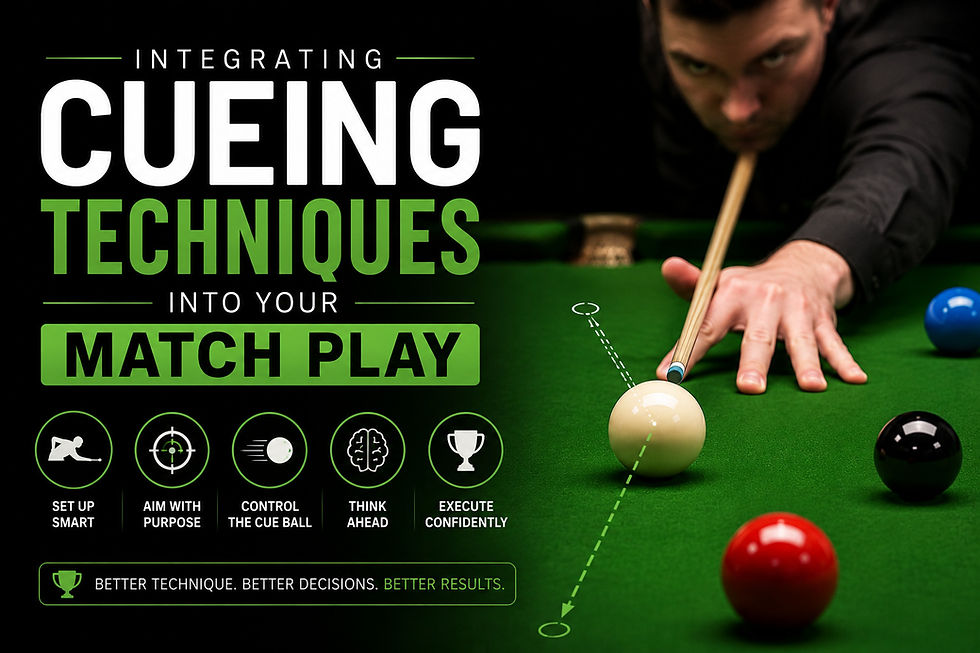
Practicing cueing techniques in isolation is important, but the real test is applying them under match conditions. Here’s how to bridge that gap:
Simulate Pressure: Practice with a timer or against a partner to mimic competitive stress.
Visualize Shots: Before each shot, visualize the cue ball’s path and the desired outcome.
Stay Present: Focus on the current shot rather than the score or outcome.
Adapt to Table Conditions: Every table plays differently. Adjust your cueing to the speed and responsiveness of the cloth and balls.
Review and Reflect: After matches, analyze your cueing performance. Identify what worked and what needs improvement.
By integrating these habits, you’ll find your cueing becomes more instinctive and reliable during real games.
Elevate Your Snooker Journey with Consistent Practice and Patience
Mastering snooker cueing tips is a journey, not a destination. It requires dedication, patience, and a willingness to learn from every shot. Remember, even the greatest players started with the basics and gradually honed their skills through persistent effort.
Keep challenging yourself with new drills, seek feedback from fellow players, and stay curious about the mechanics of your cueing. With time, you’ll notice your control, accuracy, and confidence soar.
Whether you’re aiming for a high break or simply enjoying the game more, refining your cueing technique is the key to unlocking your full potential. So pick up your cue, focus on your stance, and let every shot be a step toward mastery.
Happy cueing!


Comments